Posted
28th May 2015
Research
An excellent study from the Maillard group has put a range of detergent wipes through their paces. The keys findings are that there was a surprising degree of difference in performance between the wipes. But all of them had a nasty tendency to spread contamination rather than remove it! The study team put 7 different wipes through their paces, and tested their effectiveness in removing S. aureus, A. baumannii and C. difficile from surfaces. The imaginatively-named “Wiperator” was used, a specially-designed machine for testing wipes. There was a marked difference in performance in removing the organisms from metal discs, ranging from virtually 0 to more than 4-logs, depending on the wipe and organism. A. baumannii seemed to be easiest to remove, even more so than C. difficile spores that you may have expected to be more hardy. Leaving organism-specific differences aside, there was a marked difference in performance between the 7 wipes, probably explained by their specific formulation.
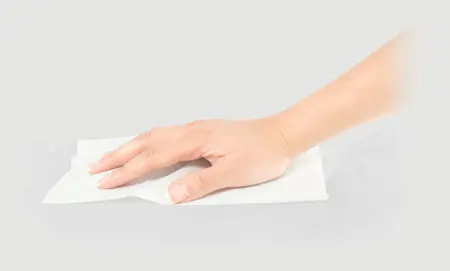
The authors also evaluated onward transfer onto three surfaces following the “Wiperator” test. Some wipes were better than others: Wipe C (the Sani Cloth Detergent Wipe, PDI) seemed particularly efficient at transferring the organisms, whereas Wipe G (Clinell Detergent Wipe) performed best, transferring no A. baumannii or S. aureus. But the bottom line is that all wipes transferred at least some of one of the organisms to the next surface. It is certainly true that no matter how tight the policy is in mandating that one wipe is used for one surface, in practice, this doesn’t always happen. Wipes are “stretched” to cover more surface area than they were designed for and this is bound to spread contamination and not deal with it effectively. Thus, the authors conclusion that combination disinfectant/detergent wipes (and possibly antimicrobial surfaces) are the way forward seems sound.
SHARE THIS ARTICLE







Tags
Latest News
Embracing sustainability and cost savings: The journey of Clinell Indicator Notes to paper-based solutions
At GAMA Healthcare, we’ve always prided ourselves on being at…
Introducing HEXI HUB: A seamless transition in our product line
We’re pleased to announce an update to our product offering…

Innovative solutions for tackling Carbapenemase-producing Enterobacteriaceae (CPE) at King’s College Hospitals
King’s College Hospital NHS Foundation Trust, one of London’s largest…
Gloves Off: reducing unnecessary plastic waste during environmental cleaning and disinfection
In this blog, Dr Phil Norville discusses the momentum-gaining ‘Gloves…